Powerful security that's simple to use
SendSafely is so easy to use, you won't even notice the cryptography at work behind the scenes. Here's a quick look at how Bob would securely send items to Alice using SendSafely. For a more technical overview, refer to our Security Overview page.

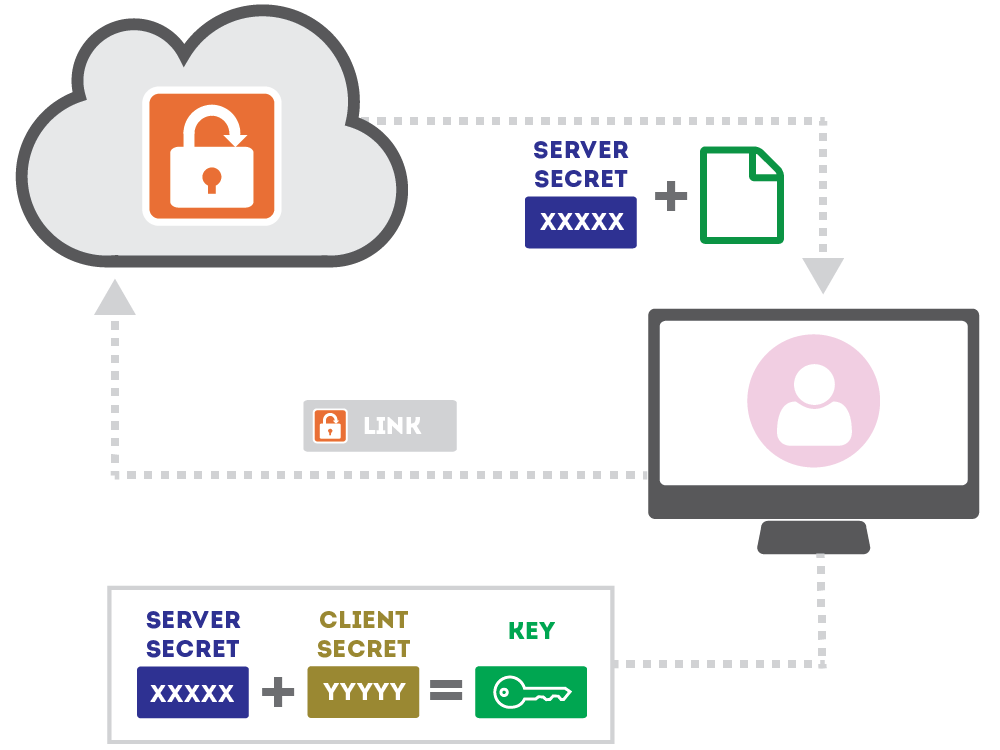
Bob creates an encryption key that will be used to protect the files he wants to send to Alice. The files are encrypted using that key before they are uploaded to SendSafely.
- The key consists of a Client Secret and a Server Secret
- SendSafely generates the Server Secret
- Bob's PC automatically generates the Client Secret
- SendSafely provides Bob with a link that he can send to Alice in order to access the files
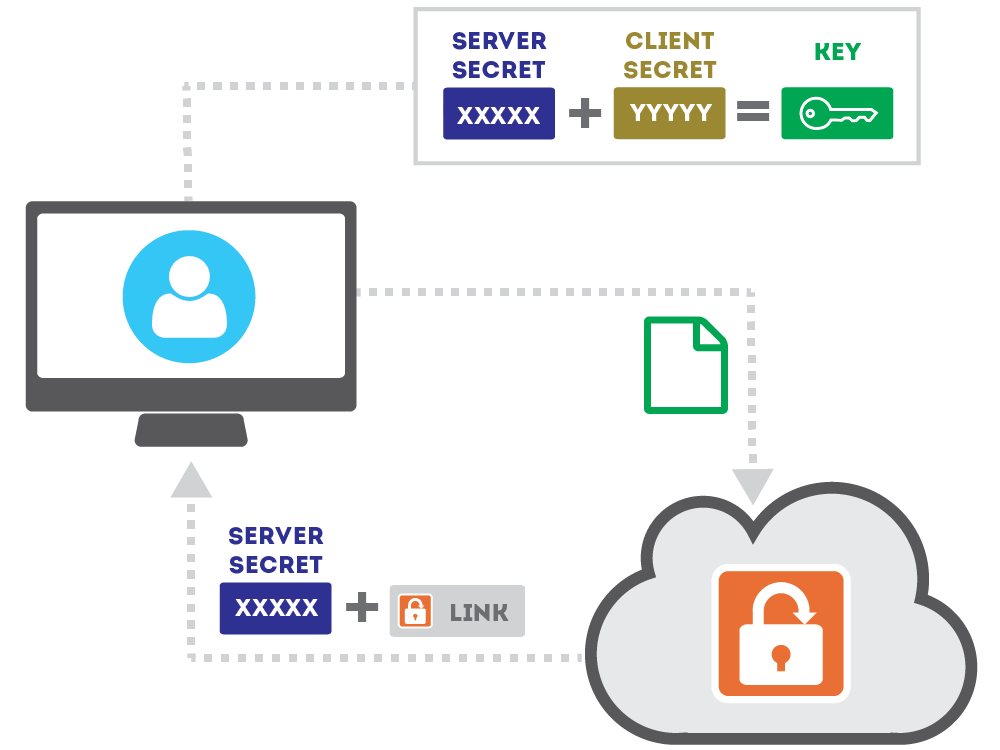
Bob sends Alice a secure link to SendSafely that also includes the Client Secret. The secret is embedded within the URL Anchor of the link, so that it won't be disclosed to the server when the link is clicked.
SendSafely will verify Alice's identity before allowing access to the files.
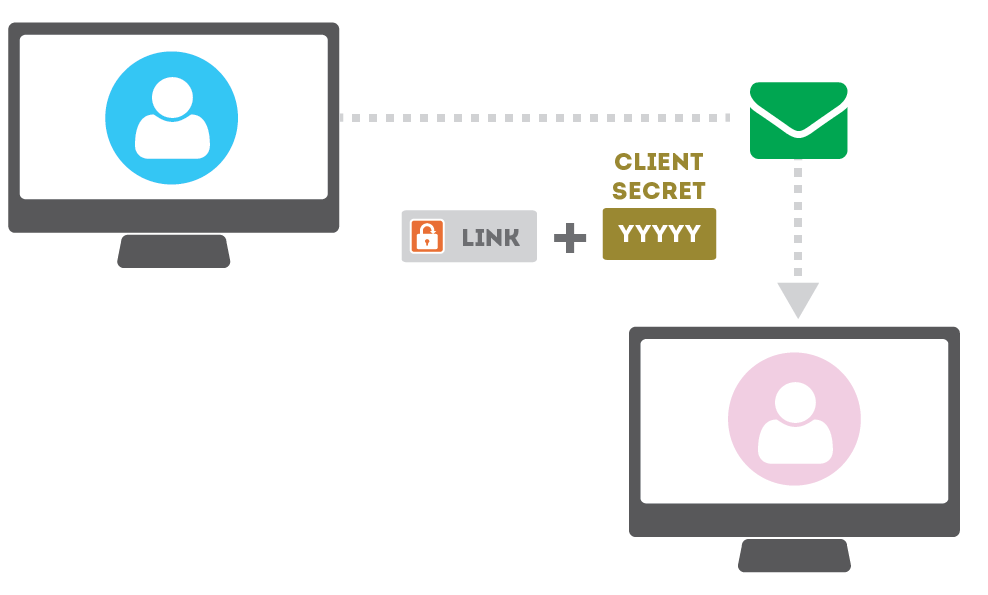
When Alice follows the link, her identity is verified by SendSafely using a one-time pass code to her email or phone. Once she is verified, the Server Secret and encrypted file is provided to her browser.
Alice's browser is able to re-compute the full key using the Server Secret and the Client Secret (read from the URL anchor) and decrypts the file.